What food is Palermo known for?
Arancina, panelle, sfincione, pani ca meusa, cannolo and more: what each Palermo street food is, which tours serve it and what suits vegetarians.
Palermo is known for fried street snacks and market food: arancina (fried rice balls), panelle (chickpea fritters), crocchè (potato croquettes), sfincione (a thick local pizza) and pani ca meusa, the spleen sandwich. Then there are the sweets, led by the cannolo and cassata. In 2012 a VirtualTourist poll, later reported by Forbes, put Palermo fifth among the world’s street food cities.
A guided tour lets you try most of these in one go. Secret Food Tours’ 9+ tastings walk has one of the longer tasting lists on this site. Below is what each dish is, what it costs at a stall and which tours list it.
Check Availability
How Palermo street food works
Most of it is fried, cheap and eaten standing up at a market stall or a friggitoria, a small fry shop. The four historic markets, Ballarò, Capo, Vucciria and Borgo Vecchio, are where you find it, and the guides on this site are built around them. In the morning the markets are full of produce and fish. In the evening the stalls around Vucciria and Borgo Vecchio switch to grills and late snacks.
Expect to pay about €2–4 a piece at an ordinary stall, and a full street food meal can come in under €10. Those prices vary by vendor, so treat them as a rough guide. Bread comes in a lot: panelle, crocchè and spleen are all stuffed into a soft sesame roll. Beer is the usual drink with street food, and Streaty’s tour listing says the same.
Palermo also has food tied to dates. On 13 December, Santa Lucia, many Palermitans skip bread and pasta and eat arancine, panelle and cuccia (boiled wheat with ricotta) instead. Tradition links this to a grain ship that ended a famine. Cassata belongs to Easter, sfincione to Christmas, and frutta martorana, the almond-paste fruit, to the Festa dei Morti on 1–2 November.
Which tours serve which dishes
Every tour below lists these tastings in its own description. Menus “vary with the season and the day” on almost all of them, so treat them as typical, not guaranteed.
- Food Tour of 9+ Tastings, Arancini, Cannoli & More ($98, 4.8 from 39 reviews): arancina, sfincione with a Partannina soda, a mild Palermitan sausage, panelle, crocchè, pasta alla Norma, a cannolo from a bakery inside an old church, coffee, white wine and a shot of Zibibbo, plus a surprise dish. Ballarò is on morning departures only. See our breakdown.
- Streaty’s Original Street Food & Market Tour ($78, 4.9 from 596): arancina, panelle, cazzilli, sfincione, pani ca’ meusa, cheese, olives and a cannolo, gelato or seasonal sweet. No fish. See our breakdown.
- Streaty’s Original Evening Street Food Tour ($78, 4.8 from 696): arancini, sfincione, panelle, croquettes, ravazzata with ragù and pani ca’ meusa, with a cannolo or gelato. See our breakdown.
- Sicilian Street Food Tour: Small Group with a Local ($46, 4.8 from 489): panelle, crocchè, sfincione, arancina, panino ca meusa, cannoli and granita. See our breakdown.
- Street Food and History Walking Tour ($56, 4.8 from 1,701): sfincione, panelle, crocchè, arancine and a cannolo. See our breakdown.
- Traditional Full Meal Food Tour with a Local ($78, 4.6 from 47): a spleen sandwich, panelle, a fried plate that may include crocchè and arancine, pasta alla Norma, and a cannolo or granita. See our breakdown.
- Street Food Masterclass: Arancine & Panelle ($193, 4.8 from 25): you make arancine, panelle and crocchè yourself, then eat them. See our breakdown.
None of the tours on this site list stigghiola, frittola, polpo bollito, cassata, iris or granita con brioche as a tasting. For those, go to a stall or a bar on your own, ideally the day after a tour, once you know your way around.
Arancina
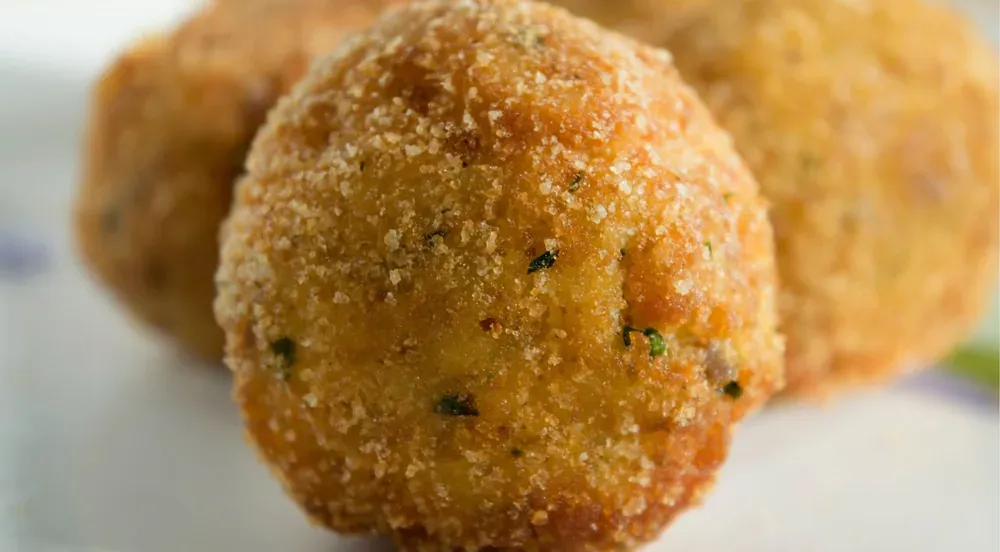
An arancina is a breaded, fried ball of saffron rice. The two Palermo classics are carne, filled with ragù and peas, and burro, filled with ham and mozzarella or béchamel. In Palermo it’s arancina, feminine. Over in Catania they say arancino, and the Accademia della Crusca accepts both. Expect to pay about €2–3 at an ordinary friggitoria. Almost every walking tour on this site includes one, and Streaty says its version comes from a particular traditional recipe.
Panelle, pane e panelle and crocchè
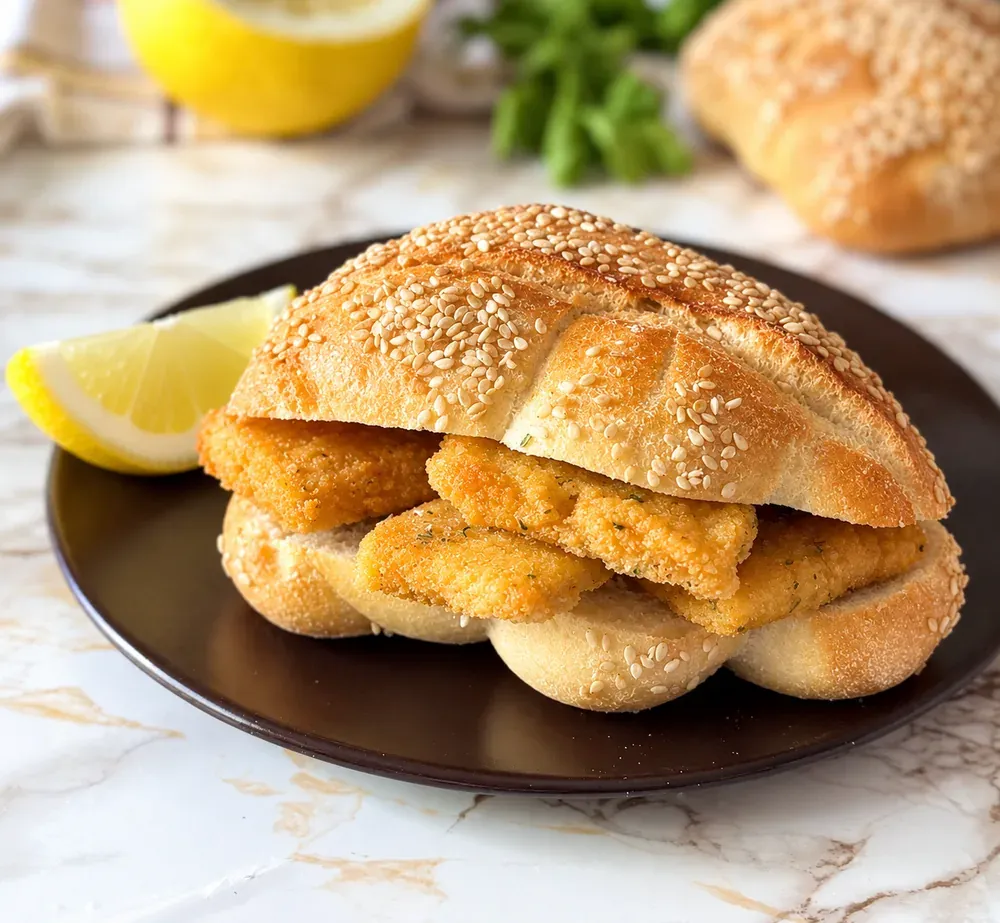
Panelle are thin fritters made from chickpea flour, water and parsley. You usually eat them in a sesame roll, as pane e panelle, with a squeeze of lemon. Crocchè, also called cazzilli, are small potato croquettes with parsley, sometimes with mint or garlic. They often go into the same roll as the panelle. A roll costs roughly €1.50–2.50. It’s the snack you’ll see most often in the markets, and most of the tours above include it. On Sundays the Guided Bike Tour of Palermo with Street Food swaps its panelle and crocchè stop for an almond dessert (our breakdown).
Sfincione
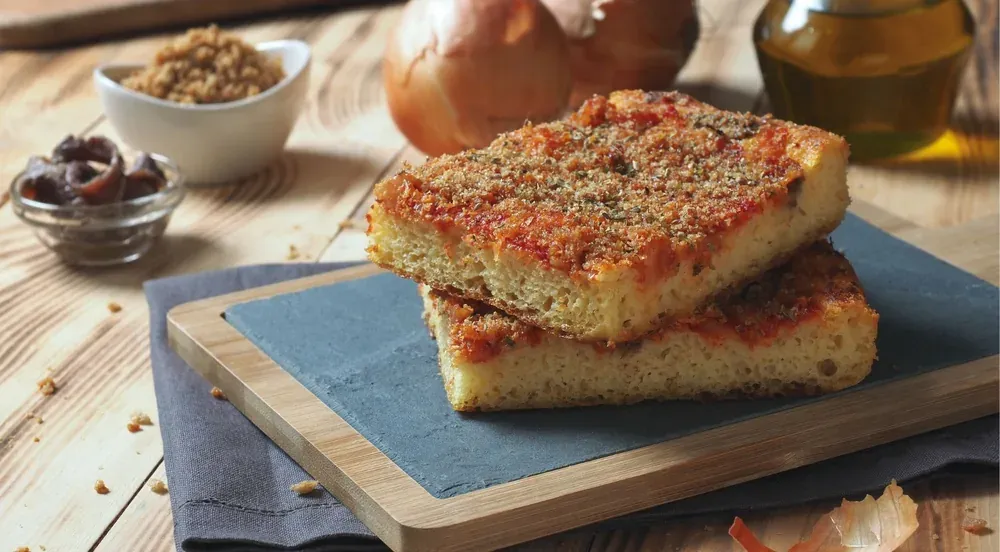
Sfincione is Palermo’s own pizza: thick, soft and closer to focaccia than to a Neapolitan base. It’s topped with tomato, onion, anchovy, caciocavallo cheese and breadcrumbs, and sold by the slice, usually for €1.50–2.50. It’s eaten all year, is especially associated with Christmas and is one of the foods of the Festino di Santa Rosalia in July. The classic version contains anchovies, so it isn’t vegetarian.
Pani ca meusa, stigghiola and frittola
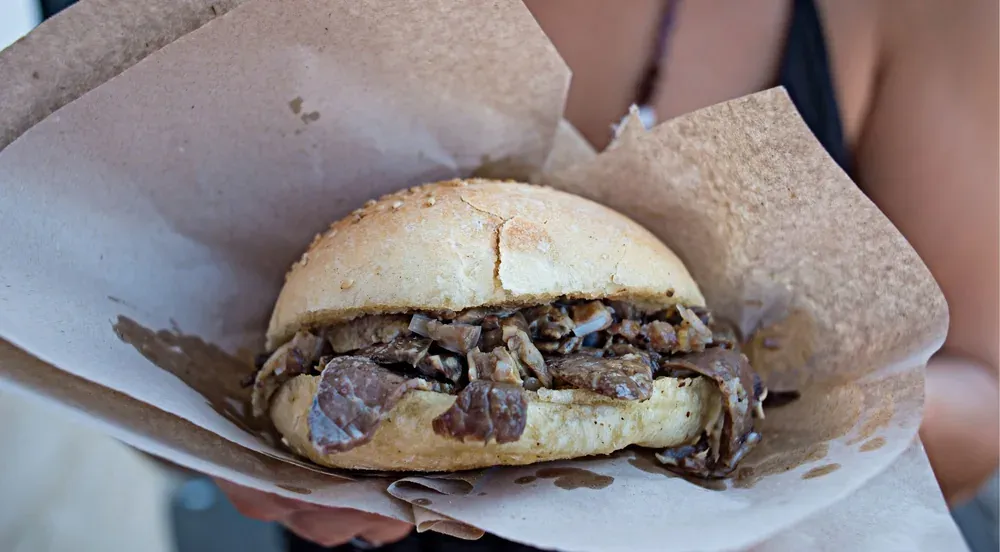
These are the dishes visitors get warned about. Pani ca meusa is veal spleen and lung, boiled and then fried in lard, served in a sesame roll. Order it schietta (“single”) with just lemon and salt, or maritata (“married”) with ricotta and/or caciocavallo. Expect to pay around €2–5. Antica Focacceria San Francesco, open since 1834, has served offal-filled focacce since 1851. Both Streaty tours, the two Do Eat Better tours and the Street Food Tour in Ballarò and Vucciria Markets (our breakdown) all list it. If you’d prefer not to eat it, tell the operator when you book.
Stigghiola is lamb or kid intestine wrapped around a spring onion, grilled over charcoal and served with salt and lemon. You’ll smell it before you see it, especially from the evening grills around Piazza Caracciolo in the Vucciria. Frittola is veal scraps (meat, fat and cartilage) boiled, then fried in lard with bay leaf and pepper. Vendors keep it warm in a wicker basket under a cloth and sell it loose or in a roll.
Polpo bollito
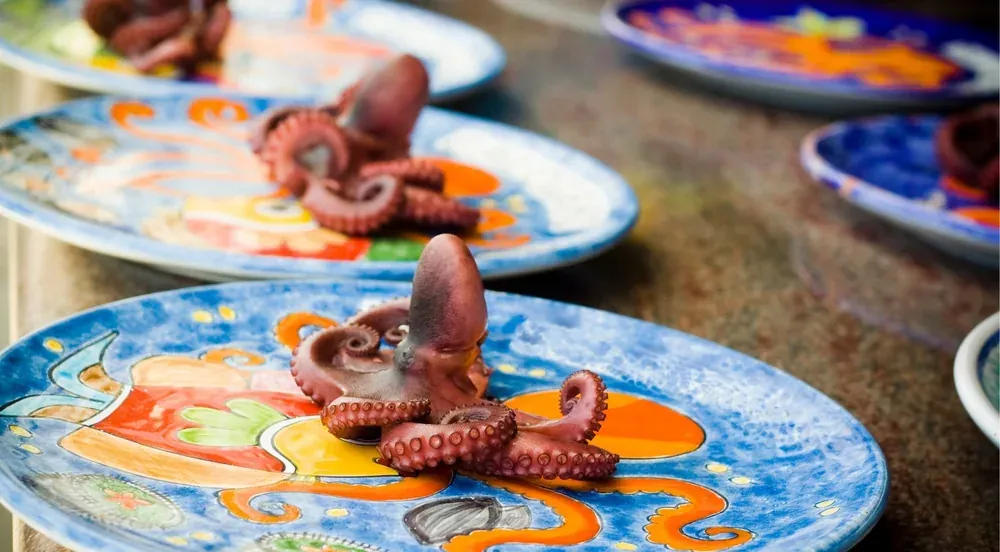
In Palermo dialect it’s purpu vugghiutu: a whole octopus boiled at the stall, cut up in front of you and dressed with lemon. It’s simple and gluten-free when served plain. None of the tours here list it, and Streaty’s market tour has no fish at all. To try it, look for the fish stalls at Capo or Ballarò in the morning.
Sweets: cannolo, cassata and iris
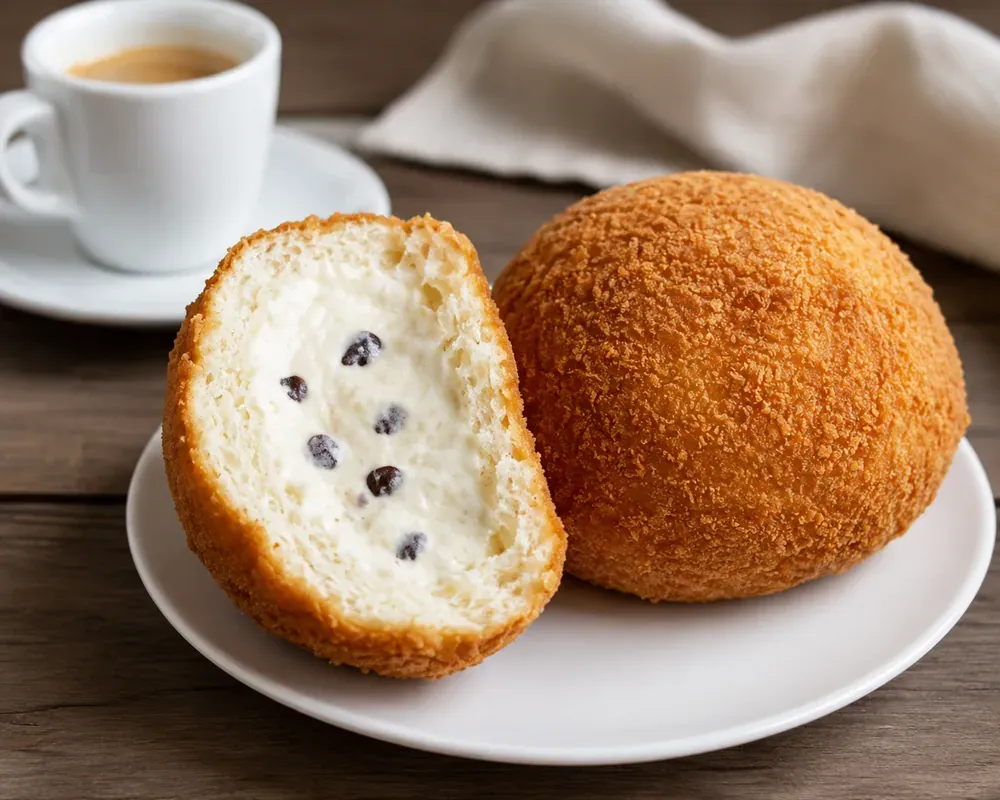
The cannolo is a fried pastry tube filled with sweetened sheep’s-milk ricotta. It was historically a Carnival sweet. Good bars fill it to order so the shell stays crisp, and it’s the usual last stop on most of the tours above, including the church bakery on the Secret Food Tours walk.
The iris is a breaded, fried ball of brioche dough filled with sweet ricotta and chocolate. Antonio Lo Verso created it in 1901 for the Teatro Massimo staging of Mascagni’s opera Iris, and his café at Via Roma 148 took the name.
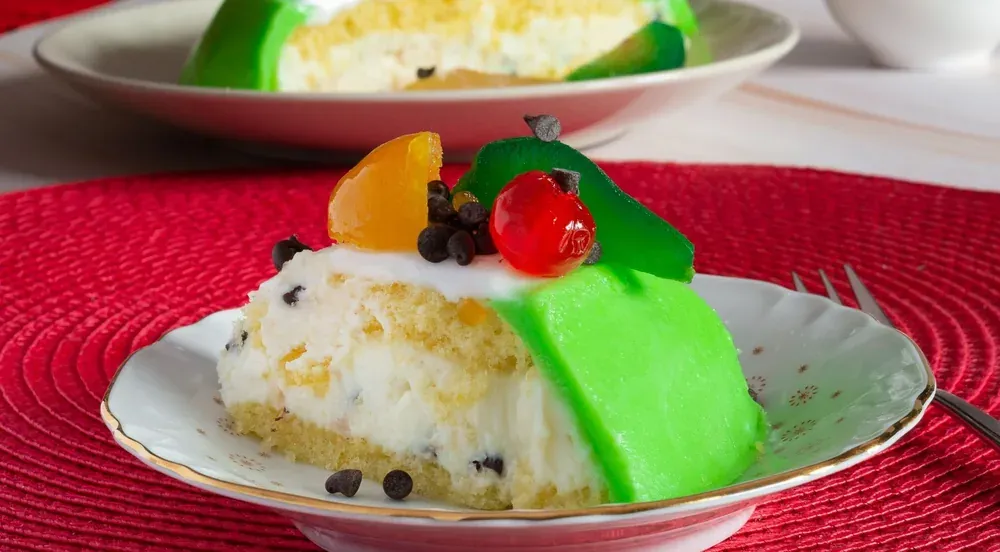
Cassata is a cake of sponge, sheep’s-milk ricotta, green marzipan and candied fruit. It’s the Easter cake, though pastry shops sell it all year. You buy it by the slice at a pasticceria, not at a market stall.
Granita con brioche
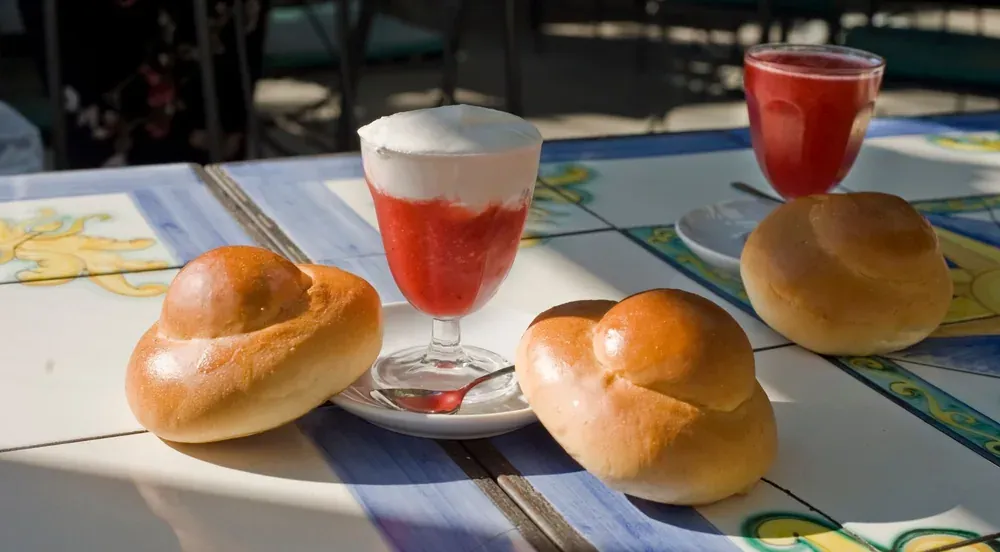
Granita is semi-frozen and usually comes in almond, coffee, lemon or mulberry flavours. It’s eaten with a brioche col tuppo, a soft bun with a topknot, as a summer breakfast. You’ll find it across Sicily, though Catania and the east claim it most strongly. Mulberry (gelsi) is usually around in June and July. The Sicilian Street Food Tour: Small Group with a Local and the Traditional Full Meal Food Tour list granita among their sweets, and the Sicilian Cooking Class with Market Tour & Meal makes almond or chocolate granita for dessert (our breakdown).
Vegetarian-friendly and not
Usually vegetarian: panelle (often vegan too), crocchè (ask about egg or cheese), the cannolo, the iris and granita. Fryers are shared, though, and some pastries use lard (strutto), so strict vegetarians should ask. The arancina al burro is not vegetarian by default, because the classic version contains ham. Ask for a spinach or other vegetable filling.
Not vegetarian: pani ca meusa, stigghiola, frittola, polpo and classic sfincione, which has anchovies. Coeliacs should know that panelle and crocchè come in a wheat roll, arancine are breaded and the frying oil is shared.
On tours, Streaty says its market tour can cater for vegetarians and pescatarians, but not vegans. The Secret Food Tours menu includes sausage, so ask about swaps before you book.
Frequently asked questions
What is the most famous street food in Palermo?
The arancina and pane e panelle are the snacks you’ll see everywhere, and pani ca meusa is the one Palermo is known for. Almost every tour on this site includes the first two.
Is it arancina or arancino?
Both are correct. Palermo and western Sicily say arancina, while Catania and the east say arancino.
What is pani ca meusa?
A sesame roll filled with veal spleen and lung that have been boiled and then fried in lard. It’s served plain with lemon (schietta) or with ricotta or caciocavallo (maritata).
Can vegetarians eat Palermo street food?
Yes. Panelle, crocchè, cannoli, iris and granita usually suit vegetarians, but ask about lard and shared fryers. Arancina al burro contains ham.
How much does street food cost in Palermo?
About €2–4 a piece at ordinary stalls, and a full street food meal can be under €10. Prices vary by vendor.
Taste most of this in one walk with Secret Food Tours’ 9+ tastings tour, or read which Palermo street food tour is right for you, the Palermo street food markets guide and the walking tour overview.
Eat Your Way Through Palermo's Markets
Arancine, panelle, sfincione and pani ca meusa across the Capo and Vucciria markets with a local guide, finishing with a seasonal dessert.
Check Availability & Book